
Cash Discount & Dual Pricing:
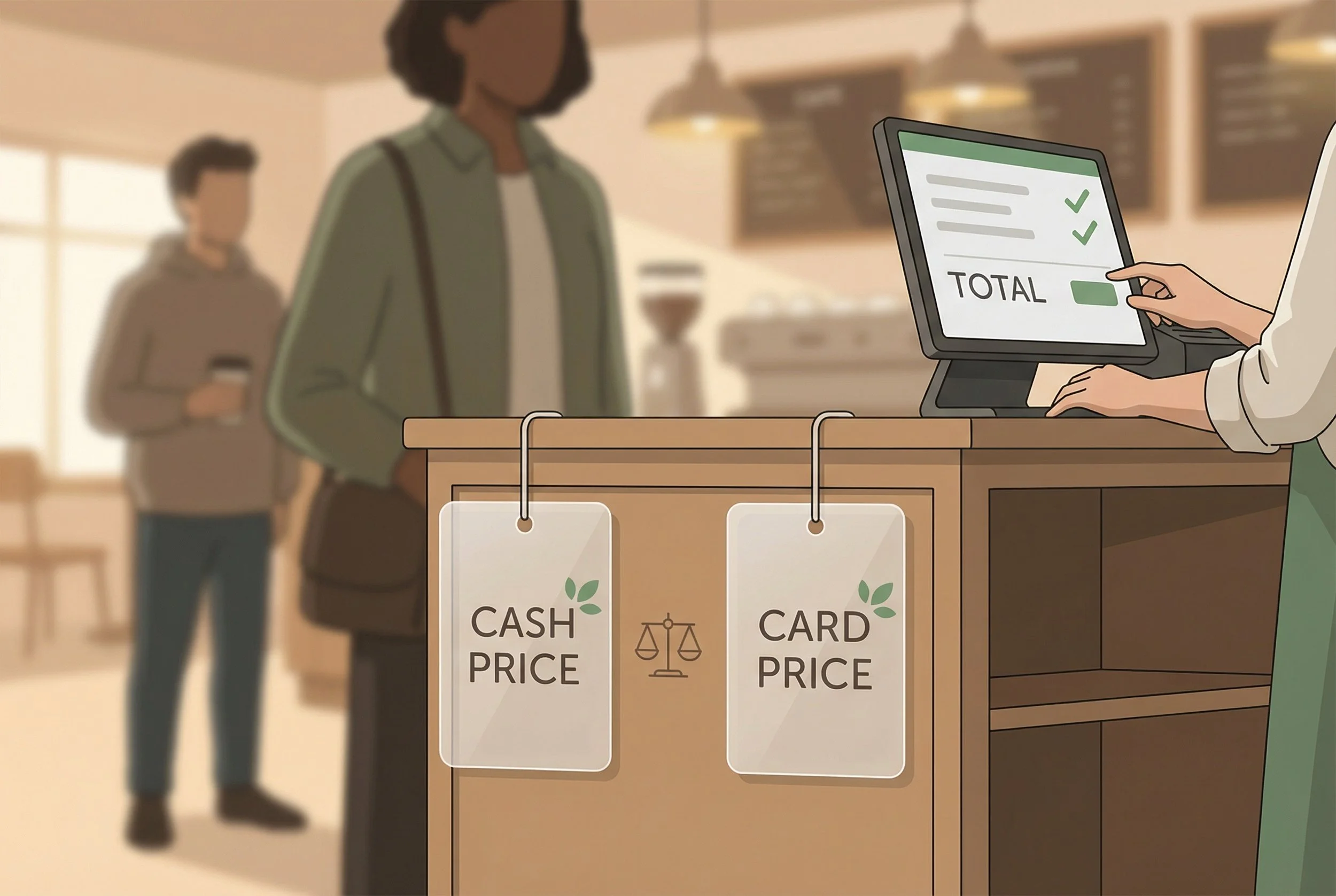
Transparent pricing gives customers choice while helping small businesses offset rising costs.
The Profit Lever Small Businesses Didn’t Expect — and Now Can’t Imagine Living Without
By Clarence Williams, CEO, Jersey POS
For the past 18 years, my career has revolved around one simple mission:
help small business operators keep more of what they earn while running smarter, more efficient operations.
I’ve worked with thousands of merchants across bars, restaurants, retail, service businesses, and high-volume venues. I’ve seen every pricing trend, every payments innovation, and every “silver bullet” promise come and go.
Very few changes have exceeded expectations the way cash discount and dual pricing have.
In fact, some of the merchants who were most resistant at the start are now the ones telling me:
“I wish I had done this years earlier.”
The Problem No One Could Ignore Anymore
Let’s start with the reality operators have been living with:
Credit card usage became nearly universal
Interchange and processing costs kept climbing
Labor, rent, insurance, and inventory surged
Margins got squeezed from every direction
For years, merchants absorbed card costs quietly — treating them as a cost of doing business rather than what they really were: a hidden tax on revenue.
At the same time, raising menu prices or service rates felt risky in an inflationary environment where consumers were already stretched thin.
Something had to give.
What Changed: Cash Discount & Dual Pricing Went Mainstream
Cash discount and dual pricing aren’t new concepts — but their execution, acceptance, and results have changed dramatically in the last few years.
Today, when implemented correctly, these programs:
Recover most or all card processing costs
Immediately restore lost margin
Increase pricing transparency
Reduce the need for blanket price increases
And importantly:
Consumers understand them.
In a world where people are paying more for everything — gas, groceries, utilities — the idea that choosing how you pay affects the final price makes intuitive sense.
The Unexpected Outcome: Consumers Feel Protected, Not Punished
One of the biggest fears merchants had was backlash.
What actually happened surprised many of them.
Customers responded with:
“That makes sense.”
“Thanks for being upfront.”
“I’ll use cash next time.”
Instead of silently raising prices across the board (which hits everyone), cash discount and dual pricing give consumers choice.
Those who want the convenience of cards can still use them.
Those who want to avoid added cost can pay with cash or debit.
In an inflationary economy, that choice matters — and customers appreciate it.
Why the Results Exceeded Expectations
For many businesses, the impact was immediate and measurable:
Processing savings flowed straight to the bottom line
Monthly margins stabilized or improved overnight
Operators regained pricing control
Cash flow predictability improved
And perhaps most importantly:
profitability improved without sacrificing volume or guest experience.
This wasn’t theoretical ROI.
It showed up in real bank statements.
The Merchants Who Hesitated… and Now Are Thankful
Almost every successful implementation has the same backstory.
At first:
“I don’t want to confuse customers.”
“I don’t want to look cheap.”
“I don’t want to be out of compliance.”
“I’ll think about it later.”
Then costs kept rising.
Eventually, they tried it — with proper guidance and compliant setup.
And within weeks, the reaction changed to:
“Why didn’t anyone explain it like this before?”
“Customers barely noticed.”
“This just gave me my margin back.”
Fear didn’t disappear — education did.
Compliance Is Not Optional — It’s Everything
Here’s where I need to be very clear.
Cash discount and dual pricing must be implemented correctly.
Improper setups can lead to:
Card brand violations
Disclosure issues
Consumer confusion
Regulatory exposure
Reputation damage
This is not a DIY project.
At Jersey POS, we’ve spent years refining compliant implementations that:
Follow card brand rules
Use proper signage and disclosures
Ensure POS accuracy
Train staff correctly
Protect both merchants and consumers
When done right, these programs are:
Transparent
Legal
Ethical
Sustainable
When done wrong, they create unnecessary risk.
Why Experience Matters
Technology alone doesn’t solve margin pressure.
Experience does.
Understanding how pricing psychology works.
Knowing how to communicate change to customers.
Implementing systems that work in the real world — not just on paper.
After 18 years in this industry, I can say confidently:
cash discount and dual pricing aren’t trends — they’re tools.
And like any powerful tool, they work best in experienced hands.
The Bottom Line
Small businesses don’t need gimmicks.
They need fair, transparent ways to stay profitable in a tough economic environment.
Cash discount and dual pricing have done exactly that:
Restored margins
Reduced inflation pressure on consumers
Given operators control again
For many merchants, the biggest regret isn’t trying it.
It’s waiting so long to do so.
—
Clarence Williams
CEO, Jersey POS